Today, industries across manufacturing, healthcare, commercial infrastructure, and data centres rely heavily on diesel generators to ensure uninterrupted operations.
However, continuous generator usage also brings significant noise challenges, especially when DG sets are installed near occupied workspaces or residential areas.
Consequently, effective industrial noise control has become an important part of facility planning. While an acoustic Enclosure significantly reduces generator noise, certain installations require additional sound management measures.
In such situations, professional acoustic room treatment helps achieve better noise reduction while maintaining proper equipment performance.
Table of Contents
Why Industrial Noise Control Is Becoming More Important
Industrial expansion and urban development have increased the need for effective noise management solutions. According to occupational health studies, prolonged exposure to high noise levels can affect worker comfort, communication, and productivity.
In addition, local environmental regulations have become stricter regarding permissible noise levels around industrial and commercial facilities.
Generator rooms are often major sources of unwanted sound because noise can travel through walls, doors, ventilation openings, and structural elements. As a result, facilities that depend heavily on backup power systems increasingly invest in comprehensive industrial noise control measures during the planning stage itself.
Understanding Acoustic Room Treatment
Every generator installation is different, as some facilities operate multiple DG sets simultaneously while others face space limitations that require generators to be installed indoors.
In many cases, relying only on an acoustic enclosure may not deliver the desired noise reduction.
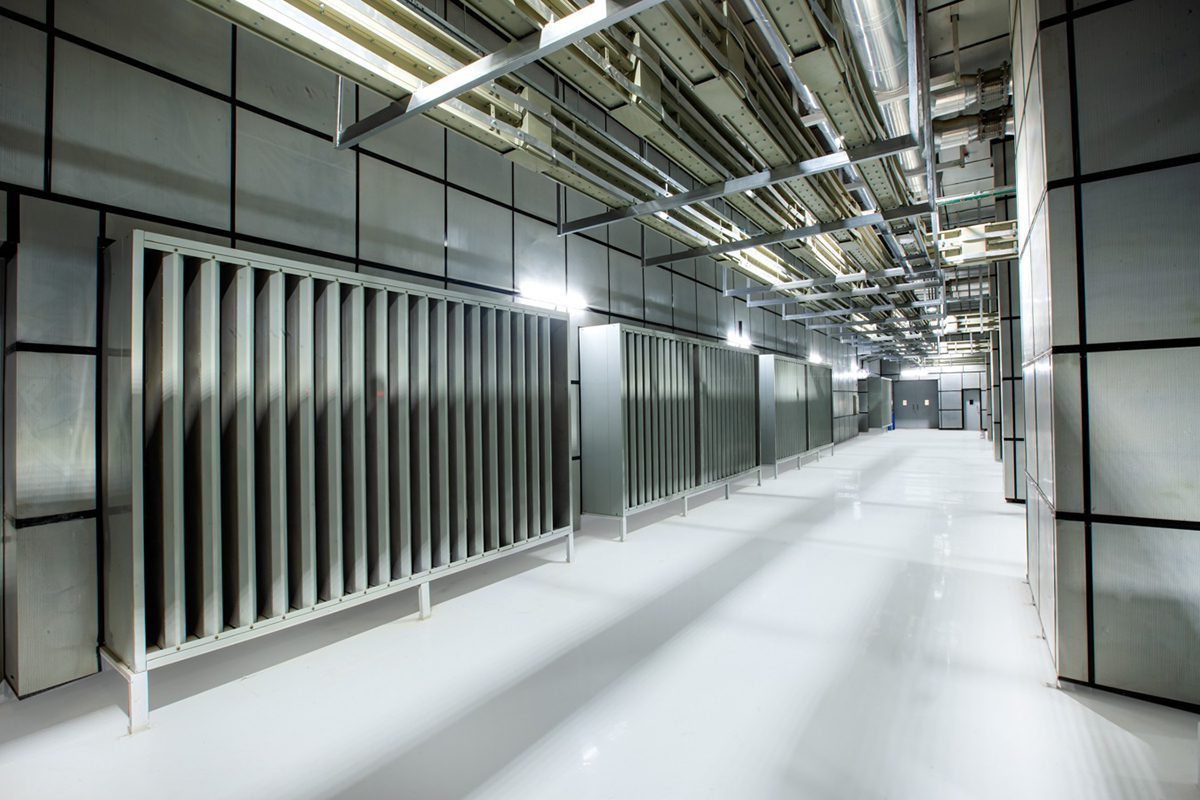
This is where acoustic room treatment plays an important role. It focuses on reducing sound transmission throughout the generator room rather than around the equipment alone.
Typical treatment measures include:
- Sound-absorbing wall panels
- Acoustic ceiling systems
- Ventilation baffles and silencers
- Treated doors and openings
- Proper room layout planning
Together, these measures help reduce sound reflections and minimise noise leakage without affecting airflow requirements.
Where Professional Acoustic Treatment Becomes Necessary
Facilities with Multiple DG Sets
Large manufacturing plants, IT parks, and data centres often operate more than one generator. Combined noise levels can become significantly higher, making additional treatment necessary for effective noise management.
Installations with Limited Space
Many commercial buildings and urban projects install generators indoors due to site constraints. In such situations, proper room treatment for DG sets helps maintain acceptable noise levels within the facility.
Sensitive Operating Environments
Hospitals, educational institutions, hotels, and mixed-use developments usually require lower operating noise levels because these spaces remain continuously occupied, and as a result, professional room treatment becomes essential for creating quieter environments while ensuring uninterrupted power reliability.
Key Benefits of Acoustic Room Treatment
Improved Noise Reduction
Professional treatment addresses multiple sound paths instead of focusing only on the generator itself. By controlling reflections and sound transmission, facilities can achieve better overall noise performance.
Better Compliance with Regulations
Many countries, including India, have prescribed environmental noise standards for industrial operations. Effective planning helps organisations comply with these requirements and avoid future modifications or penalties.
Improved Workplace Comfort
Excessive noise can make communication difficult and create discomfort for operators and maintenance teams; consequently, maintaining lower sound levels becomes equally important for creating a safer, more comfortable, and productive working environment.
Efficient Equipment Operation
Noise management should always be balanced with ventilation requirements, as poorly designed soundproofing systems can restrict airflow and increase room temperatures, which may eventually affect generator performance and service life.
Consequently, professional acoustic solutions are designed to ensure effective noise reduction while maintaining proper cooling conditions and operational efficiency.
Why Customised Solutions Deliver Better Results
Every facility has different operational requirements, and factors such as generator capacity, room dimensions, operating hours, and surrounding infrastructure significantly influence acoustic performance; therefore, standard designs may not always deliver the expected results.
For this reason, many industries now prefer customised acoustic solutions developed through proper site assessment and noise evaluation, and in this context, solutions such as acoustic room treatment by Escon gensets focus on balancing sound attenuation, ventilation requirements, and maintenance accessibility according to actual operating conditions.
Moreover, a customized approach helps avoid costly future modifications while ensuring long-term operational efficiency.
Factors to Consider Before Planning Noise Control
Before implementing any acoustic solution, facilities should evaluate several important factors:
Expected Noise Levels
Understanding the sound generated by the DG set helps determine the level of treatment required.
Room Layout and Ventilation
Generator rooms must maintain sufficient airflow to ensure efficient operation.
Future Expansion Requirements
Facilities planning additional generators should account for future acoustic requirements during the initial design stage.
Regulatory Compliance
Meeting environmental noise norms from the beginning can prevent operational challenges later.
Proper planning during the installation phase often delivers better results than implementing corrective measures after commissioning.
The Growing Need for Effective Industrial Noise Management
As industries continue to expand, effective industrial noise control has become essential for maintaining comfortable working conditions and meeting regulatory requirements.
While an acoustic enclosure remains an important solution, many facilities also benefit from professional acoustic room treatment for better overall performance.
Experienced solution providers, including Escon Gensets, can help industries implement practical noise management strategies based on specific site requirements.
FAQs
1. Why is industrial noise control important in generator installations?
Effective industrial noise control helps improve worker comfort, supports regulatory compliance, and reduces disturbances in surrounding areas, particularly in facilities operating generators continuously.
2. When is Acoustic Room Treatment required?
Acoustic room treatment is beneficial when generator rooms have multiple DG sets, limited installation space, or stricter noise requirements, such as in hospitals and commercial complexes.
3. Is an acoustic enclosure enough for every application?
An acoustic enclosure effectively reduces generator noise in many cases, but certain installations require additional room treatment to control sound transmission throughout the entire space.
4. What factors should be considered for room treatment for DG sets?
Room size, ventilation requirements, expected noise levels, generator capacity, and future expansion plans are important considerations when planning room treatment for DG sets.
5. How does acoustic room treatment by Escon gensets support industries?
Acoustic room treatment by Escon gensets focuses on customised solutions that balance sound reduction, ventilation efficiency, and practical operational requirements across different industrial applications.